


Poetry: “Millennials after the banishment” by Ridwan Fasasi
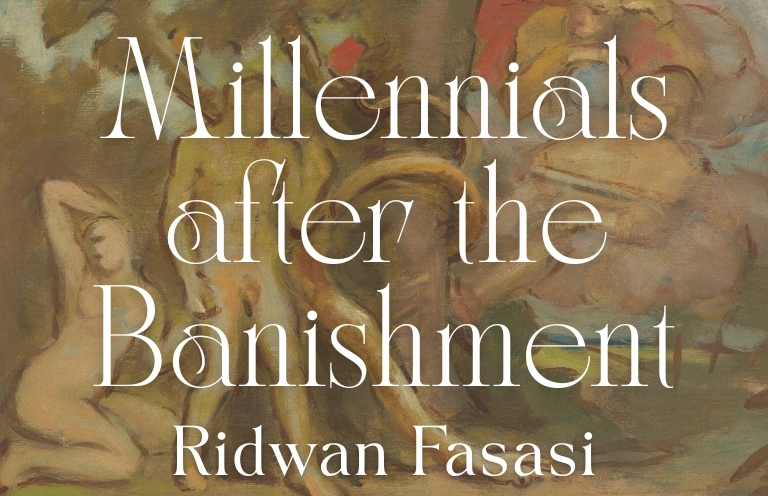
One particular area of genius in Ridwan Fasasi’s poem “Millennials after the banishment” resides in its details — in particular, line breaks and ends of lines. The ending words receive emphasis and, when read in succession, even have a coherence of their own. However, it’s not only this close level of craft that makes the poem’s content sing. Couplets and repetition with variation, in combination, add to the message’s meaning. Each time a similar idea reemerges, it is transformed. And this transformation is mirrored in the image of the speaker pulling “butterflies / out of the wilderness in [them].”
Read Fasasi’s poem below.
Millennials after the banishment
I have learnt to pull butterflies
out of the wilderness in me. & yet,
I am a stranger to every metaphor
for beauty. Everything I’ve leaned on
suffers impermanence, even
this body is succumbing to the misery—
growing old against my will.
Years of plowing the field,
& this is the metaphor of its harvest:
gloom. Faith grieves the loudest
amongst what the body knows.
It is the philosophy we have given
to the body for its perennial suffering.
& it’s all I’ve held in myself.
I have left the joy in me in that
garden, though, I left with it a new
wretched, wretched name—
Eden, ēdhen, in Hebrew, desire.
Or lust: the sin before the sin
has a name. In any case, the story
of our creation begins with
darkness, formless thing without
a body. It’s a forewarning.
What seeks light is not free from
darkness. The world is now
filled with people I hardly know.
I have mourned the ones
I know in the different ways
I do not remember. My sorrow,
part hymns, part hunger for what
cannot be recovered.
My room, an open wound.
The birdsongs, peering
through my window, sound
like Eve & Abel before death.
Innocent, split like how
a wood succumbed to the
tyranny of axe. The birdsongs,
questioning me of what I know
& reminding me of what I don’t.
a wood succumbed to the tyranny
of axe. Innocence, split, like
Eve & Abel before death,
sounds like the birdsongs peering
through my windows
or my room: an open wound;
Part hunger for what
cannot be recovered, part hymns.
My sorrow, I do not remember.
I know in different ways I have
mourned the ones I hardly know.
The world is now filled with people.
darkness is not free from
what seeks light. It’s a forewarning—
how darkness, formless thing
without a body begins the story
of our creation. The name
before the sin becomes a sin.
Eden, ēdhen, in Hebrew
means desire or lust—
a name wretched & wretched.
Though I left it as a garden,
I hold all the joy in myself.
For its perennial suffering,
the body is the philosophy
we have given. Amongst what
the body knows, faith grieves
the loudest.
& harvest of gloom is in the metaphor
Years of plowing
the field. Growing against
my will, this body, succumbing
to misery. Everything I’ve
leaned on suffer impermanence.
I am a stranger to every
metaphor for beauty.
& yet, out of the wilderness
in me, I’ve learned to pull butterflies.
Ridwan Fasasi
Ridwan Fasasi, SWAN I, is a Nigerian Editor, Writer, and Art Curator of Yoruba Descent. A Pushcart Prize and 2x Best of the Nominee whose works have appeared on ANMLY Lit, Chestnut Review, Palette Poetry, Euonia Review, Akpata, Lucent Dreaming, The Shallow Tales Review, Strange Horizon, Hindsight Creative, among others. He is the winner of the 2024 Labari Prize for Poetry, Ignyte Award for Best Speculative Poetry and The second prize winner of The Kayode Aderinokun Poetry Prize. His works have been shortlisted for the SprinNg Annual Poetry Contest, Gbemisola Adeoti Poetry Prize, Lucky Jefferson Poetry & Prose Contest, Splendor of Dawn Poetry Contest, SOBAF Poetry Slam, and also longlisted for the 2024 Akachi Prize for Literature. He is currently a reader at Anomalous Press and works as a reviewer at D’lit Review. Find him on Twitter (sorry X) @Ibn_Yushau44.
