


2026 Frontier OPEN Finalists Part Two: Anja*Oliver Schneider, Chukwu Emmanuel, Ed Gaudet
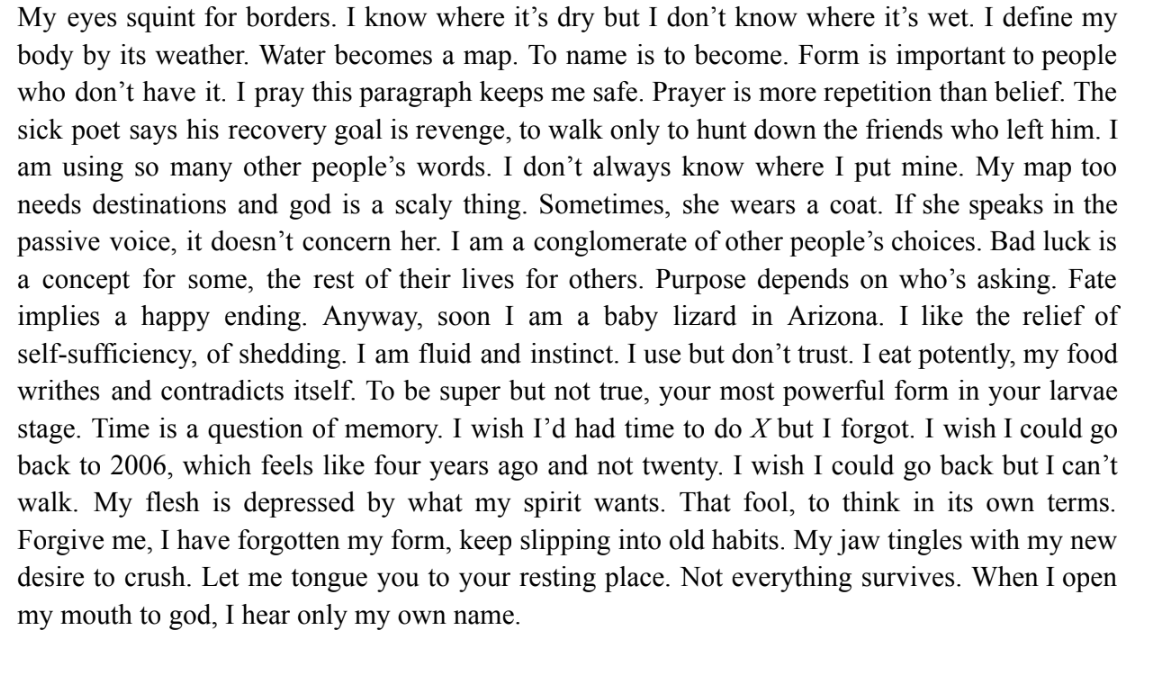
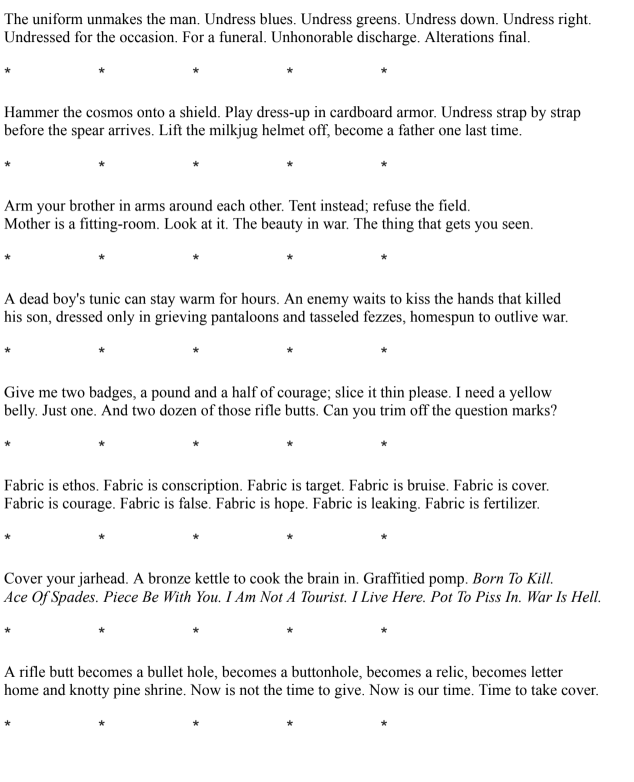
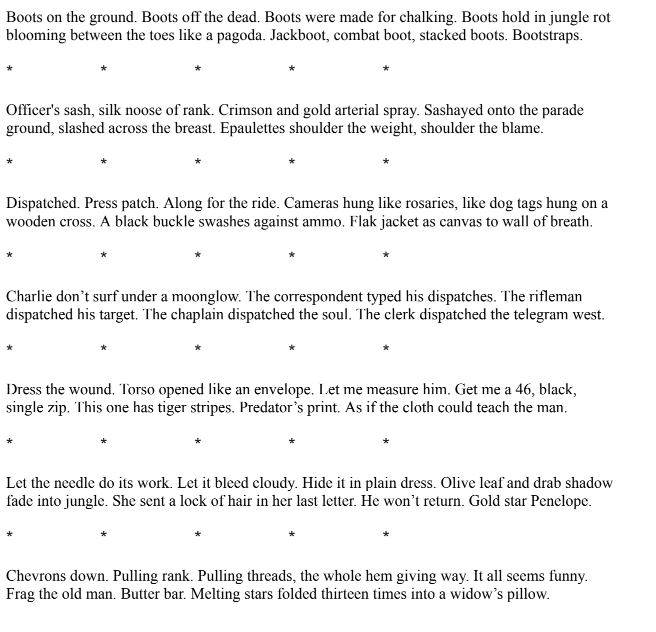
In “Carol says she’ll name a lizard after me and feed him superworms,” the speaker moves through questions of form, faith, memory, and selfhood, becoming increasingly unsure where one ends and the other begins. “To name is to become,” they write, but the poem keeps shedding its forms—body, map, god, lizard—until the speaker opens their mouth to god and hears only their own name. In “Doing the Lord’s Work,” Chukwu Emmanuel confronts inheritance through the intimacy of violence. A son watches his father kill birds, caught between hurt and love, tenderness and brutality, as the father’s lesson becomes something the speaker must both inherit and interrogate. In “Field Dress,” the uniform becomes its own kind of inheritance. Through fabric, weapons, rank, and wounds, the poem pulls apart the language of war until the man and the things that dress him become difficult to distinguish.
Across these three poems, we encounter speakers negotiating the forces that have given them shape: family, faith, violence, language, and history. Each poet unsettles the boundary between the self and what is imposed upon it, asking what remains when a body sheds, a son questions, or a uniform comes undone. These poems find transformation not in becoming something entirely new, but in discovering how much of us has always belonged to something else.
Carol says she’ll name a lizard after me and feed him superworms
by Anja*Oliver Schneider
Doing the Lord’s Work
by Chukwu Emmanuel
to my hands — that conviction
to hone my craft. I peer down: breathless.
Just like my father’s father. I hear
moans, not words. A collared bird says, “Have mercy.”
Another says, “Spare my life”
which means: bear witness. Which means:
history is cruel. I fall to a side,
make as many stops as I can, then
direct my blade to the birds. I try
to be good this time, which is unfair
given my softness, how I watched him
name them birds, call them chosen.
That’s a lot of niceness, I think —
the birds shaking out their morning dampness
in the first breeze — watching them
with infantile intelligence, how they squint
at the seam of light, naive at first,
then suddenly their mouth a small wound,
which makes me forget myself. In each bird’s voice
a song, as if to say: see, an innocent is taken.
Their raspy rattle can’t clear the air,
can’t fight whatever comes at them
insistent and unappeasable.
Shaken, I look at my father: custodian
to an iron law. How understanding is
He lifts a hand. What that hand is saying
means he’s not him anymore.
Father, it frightens me that those
you raised, loved, and fed would die
by your own hands. Cleaning up
the bird’s blood, my father says,
“Peruse your daily dishonesties.”
In the middle of what I was asking,
something between hurt and love
folds through me. My mother says, “Shut up
about the fleeting beauty of the world,”
and I get it. All things fade. Just tell me, Father:
do things happen for no reason?
Then I will believe all the mysteries.
Field Dress
Anja*Oliver Schneider (they/them/theirs) is a queer, disabled non-binary trans educator, writer, poet, scholar, and Accessible Yoga teacher. Raised and currently living in a small town near Frankfurt, Germany, they hold a master’s degree from Goethe University and have also studied in several parts of the U.S., including at the University of Wisconsin-Madison. Oliver’s work explores themes like disability, intersections of lesbian and trans experiences, abuse in queer partnerships, and trans masculinities, always in collaboration with nature. Oliver is the author of Non-Binary. An Introduction, and their writing appears in queer-feminist publications such as The Journal of Lesbian Studies, ButchIsNotADirtyWord, Transcodiert, FLUT, and Queer History and Stories after Stone Butch Blues. Find them on Instagram @amschneiderx or at www.am-schneider.com
Chukwu Emmanuel is a poet concerned with the grammar of manhood: how it is performed, inherited, survived, and rewritten. His work examines masculinity not as an identity but as an ongoing negotiation between violence and mercy, privacy and confession, the father’s hands and the son’s mouth. His works have been finalists for the October Poetry Prize, Kalahari Review Igby Prize for Nonfiction, and Kreative Diadem Poetry Contest, and the Editor’s Choice at Fiery Scribe Review. He lives and writes in Nigeria.
Ed is a poet and healthcare technology entrepreneur from Hanover, MA. His work has appeared in The Southwest Review, The Journal of American Medical Association (JAMA), Nixes Mate Review, Blood & Bourbon, The Inflectionist Review, the Fourth River, Slipstream, Kitchen Table Quarterly, Naugatuck River Review, Panoply, and Burningword Literary Journal.
