


2026 Frontier OPEN Finalists Part Three: Nirvana Shahriar, Ricardo Moran, and Osmani Ochoa
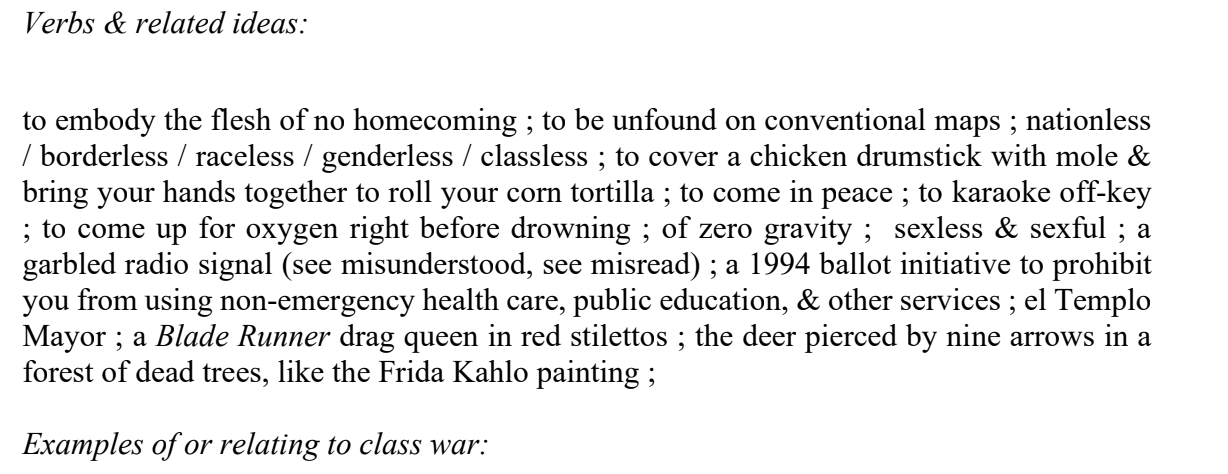
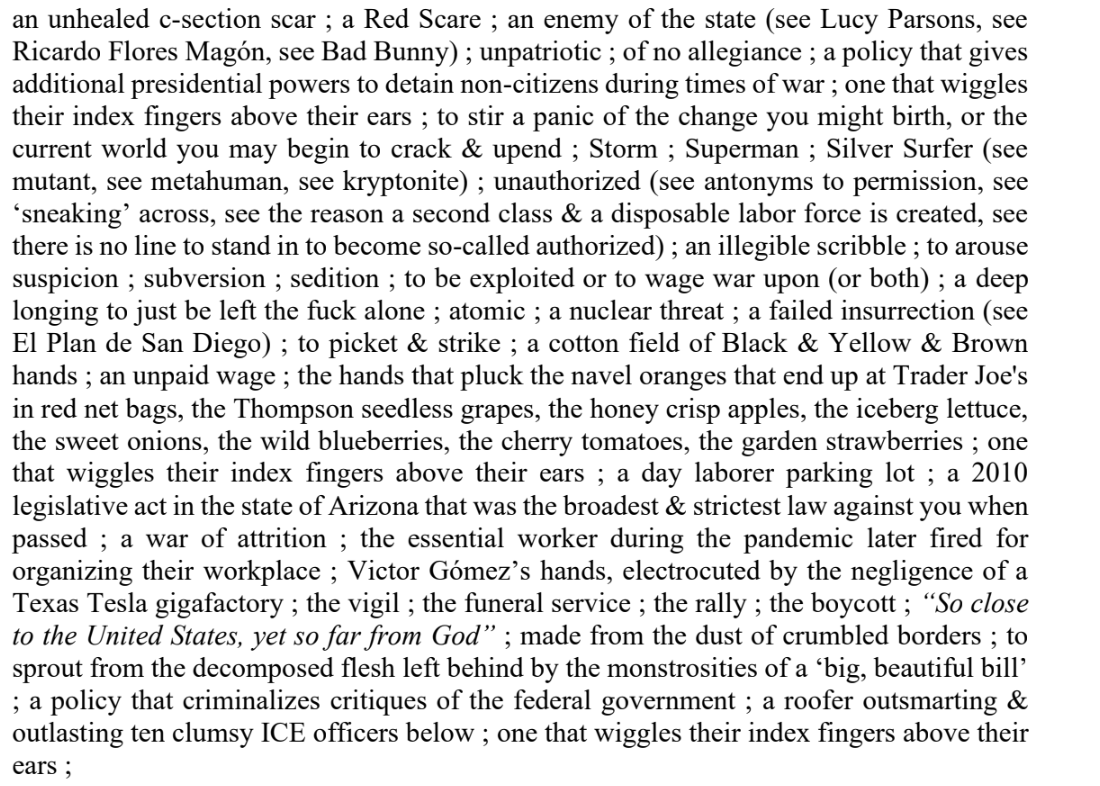
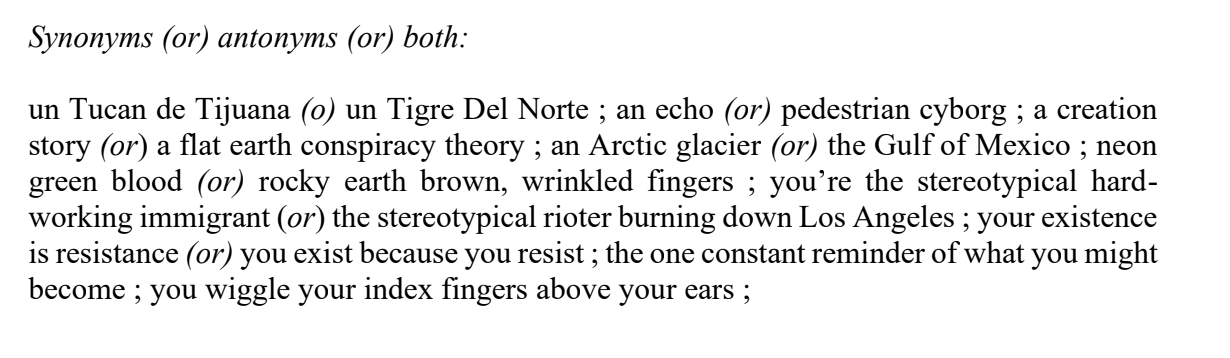
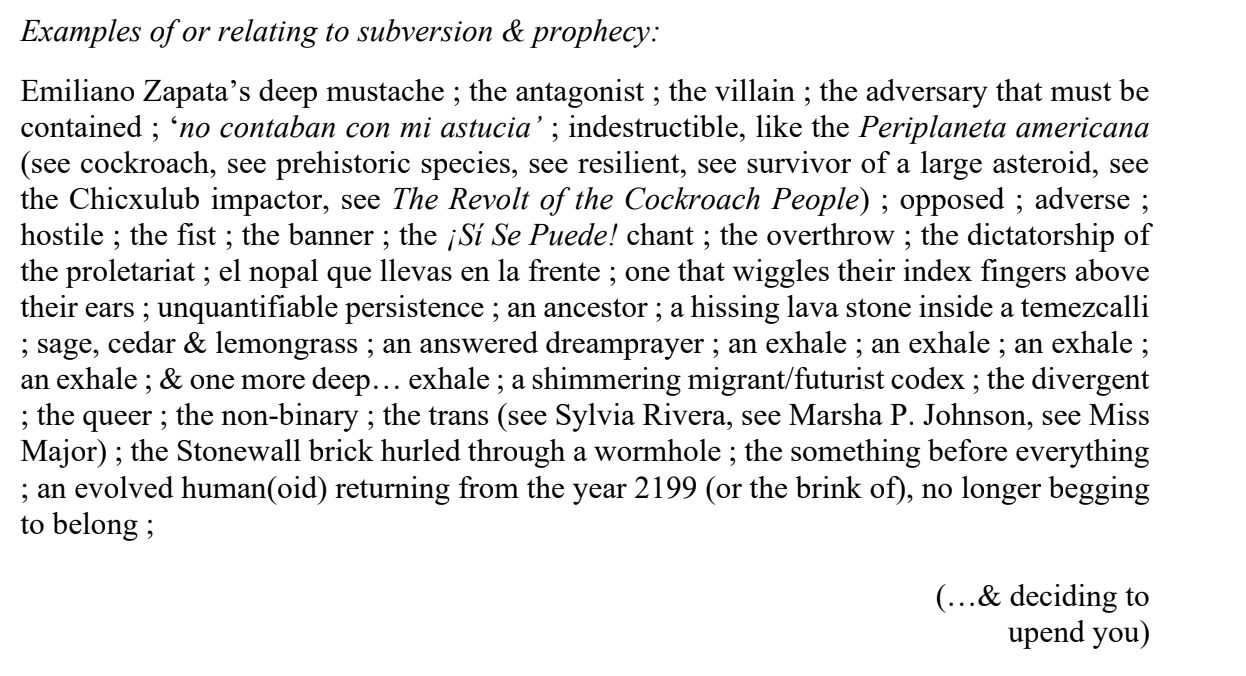
In “Living Room Lessons,” Nirvana Shahriar moves through a smoke-hazed, searching consciousness where family, memory, and politics begin to blur into one another. Cigarette ash, cardamom tea, a grandmother’s body, a father’s music, and a photograph of Paul McCartney in pre-revolutionary Tehran become points of connection as the speaker tries to make sense of histories both intimate and political. In “La Bruja listens to the Go-Go’s,” Ricardo Moran finds belonging in the eccentric warmth of a maternal witch whose kitchen becomes a space of humor, tenderness, and self-discovery. In “Alien,” language itself becomes the site of inquiry, as a single word expands into a sprawling map of borders, race, labor, sexuality, displacement, and resistance.
Across these poems, speakers search for ways of understanding themselves within worlds that have already given them names, histories, and expectations. Whether through an altered consciousness, a bruja’s irreverent embrace, or a word pushed beyond its conventional meaning, these poems find belonging in the act of making new connections—and making new meanings for the self.
Living Room Lessons
by Nirvana Shahriar
fall softly
onto a dirty, crystal
ashtray, while I
plunge deeper into
some strange thought
about my grandmother’s insides
as if a metaphor might be able to contain her
as if she isn’t the scent of Marlboro Lights
and one sweetened cup of cardamom-infused black tea
followed by one bitter cup of cardamom-infused black tea
I look up at my laptop
opened to a photograph of Paul McCartney
grainy and sepia-toned
smoking hookah on a rug
on the floor of someone’s pre-revolutionary home
in Tehran
The Revolution was not about the price of watermelons, the Ayatollah once said
When he was my age
I said to grainy Paul McCartney
my father played the drums
in a Swedish band of blondes
and blue-eyed devils
who called him The Ayatollah of Rock and Roll
But Paul stood still
smoking shisha on a rug
I turn on the news instead
and fix my ears on the doctor
the journalist
the teacher
the poet
There is a man on the news who says,
The worst catastrophe is the one that makes you laugh
La Bruja listens to the Go-Go’s
by Ricardo Moran
while pots on the stove bubble. jars of herbs, chicken feet.
The Go-Go’s “Our Lips are Sealed” rolls through the room.
She hums, takes dishes out of cardboard boxes.
so many cardboard boxes, small saint figurines
line the walls like people outside the unemployment office.
scarves, throws in blues, reds, yellows
to wrap, to soothe, to curse.
Do you have a metiche coworker to vanquish?
Is your husband putting his dick somewhere else?
How about a pendejo boss, cerdo racista?
I won’t kill him, just fuck up his leg, make him hobble.
Or I can kill him, not a problem, but oye, it will cost extra.
She stirs the brown thickened liquid in the 8oz glass.
Is this the potion?
No, pendejo. That’s my Nestle’s Quick.
It helps me to focus.
“We Got the Beat” begins.
La Bruja hips jiggle. hands clap. singing along.
Mole on the stove bubbles. the spicy aroma
hits my nostrils. corn tortillas.
The bowl of candy on the table between us.
I reach for one and she slaps my hand.
Those are my Skittles, cabron. Hands off.
So, tell me, how can I help you?
I can’t get a date.
Oh, sorry. You got a tiny pee pee?
No, it’s okay.
Are you an asshole?
No, I don’t think so.
If you’re not sure, then maybe that’s the problem.
I don’t like girls. And I want to like girls.
La Bruja gets up, lowers the volume.
I’m sorry, I cannot help you.
I cannot make you like clittie or titties, mijo.
Adjusting the knob on the stereo, the Go-Go’s return.
I get up from the table.
Okay…well, thanks anyway.
La Bruja ladles chicken mole, red rice on a plate.
Oye, why are you leaving? Stay awhile. I can help you get a date.
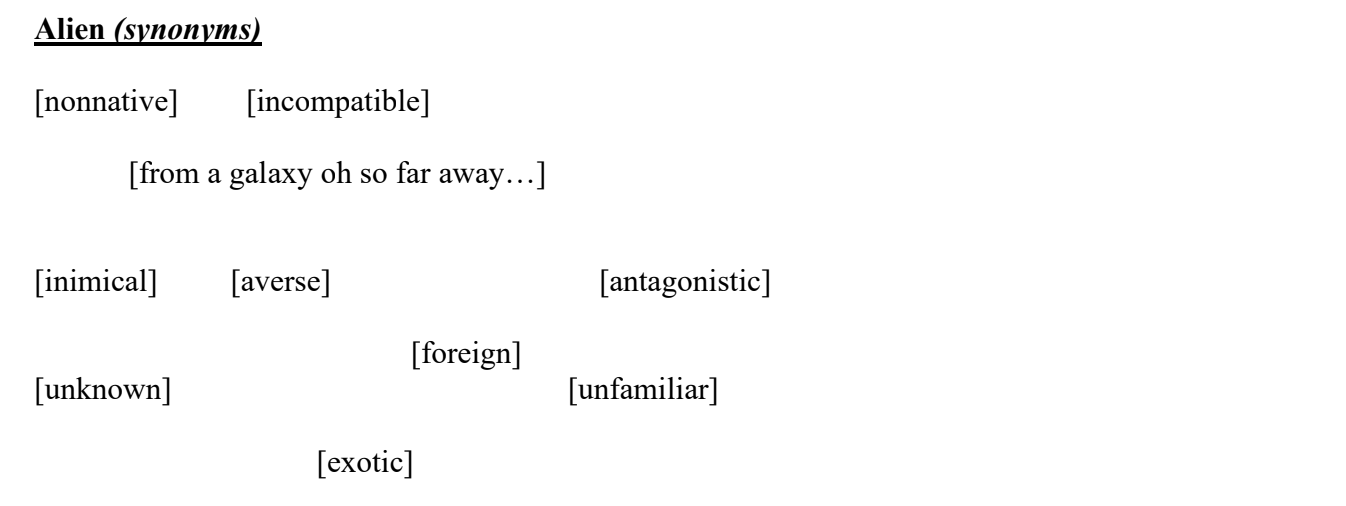
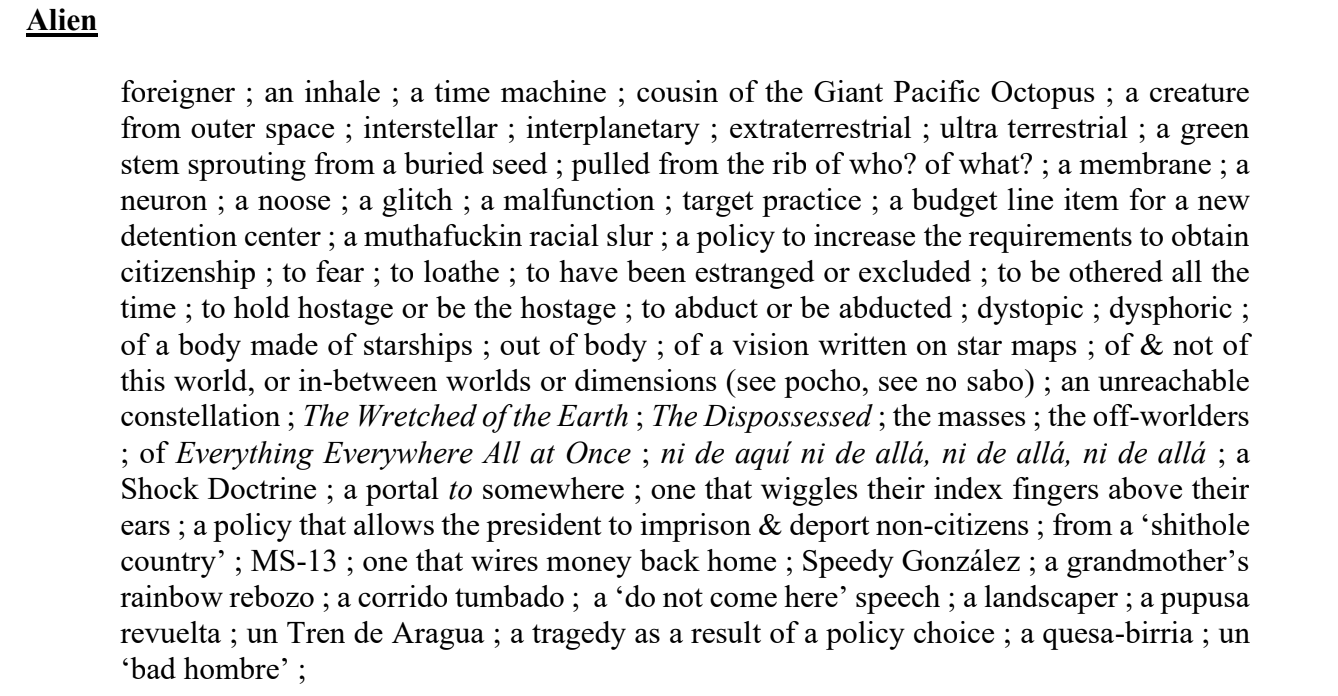
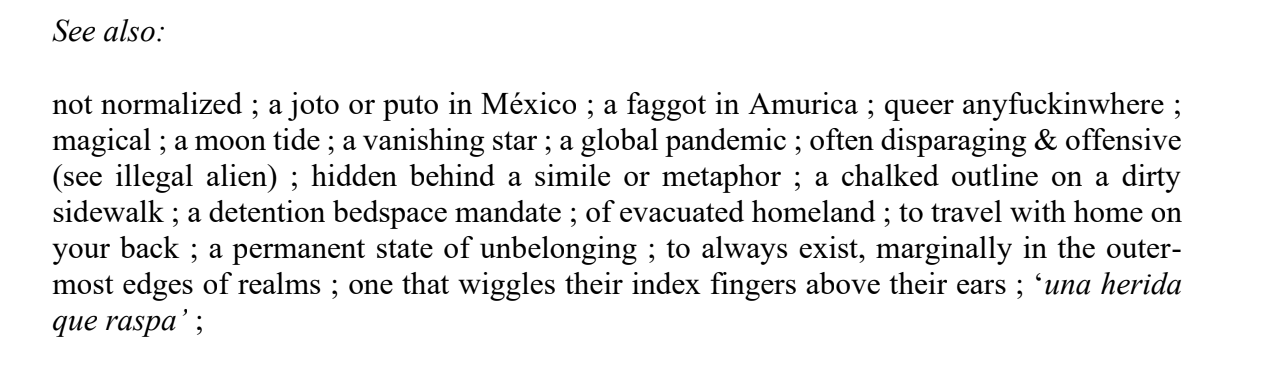
[ ay–lee–uhn ]
Nirvana Shahriar is a poet and doctoral candidate in English at the University of California, Santa Barbara, where she is writing a dissertation on contemporary US poetry with an emphasis on SWANA diaspora writers. She is also an editor at Camera Obscura: Feminism, Culture, and Media Studies. Her creative/critical work has been published in The Black Scholar, Foundry, The Lamp, and West Trade Review (forthcoming).
Ricardo Moran is a past recipient of the Peter K. Hixson Memorial Award for Poetry. His writing has been published or is forthcoming in Beatific Magazine, Cider Press Review, Midwest Quarterly, Perceptions Magazine, East Jasmine Review, The Seattle Star, and Willa Cather Review. He is a former board member and current advisory board member for San Diego Writers, Ink. and is a former associate editor with Zoetic Press. His debut poetry anthology, Not Quite Heaven, from Broken Tribe Press, was published in 2025 and was shortlisted for the 2024 Tribe Poetry Award. He has delivered poetry readings in Albania, Ireland, and a book signing in Norway. He lives in Albania, enjoys traveling, and learning how to say “good morning” in as many languages as possible. In every timeline, you can find him reading, writing, and plotting right here: www.ricardomoranwriter.com
Osmani R. Ochoa is a queer Mexican-Xicano poet and longtime national organizer for immigrant and worker rights based in Los Angeles, California. Their migrant futurist writing appears in Space & Time, Star*Line, Windward Review, La Raíz Magazine, Stone of Madness, and more. They won the 2025–26 Abode Press Chapbook Prize for ‘How to Survive an Asthma Attack in a Climate Apocalypse‘ and are featured in ‘Not Your Papi’s Utopia: Latinx Visions of Radical Hope’ (Mouthfeel Press) and ‘Xicanxfuturism: Gritos for Tomorrow‘ (Riot of Roses Publishing). Ochoa is currently pursuing an MFA at Randolph College.
